
Last Updated on August 28, 2026 by Batau
Batau Ba Seloane Successfully Conclude Male Initiation School, Preserving Culture for Future Generations
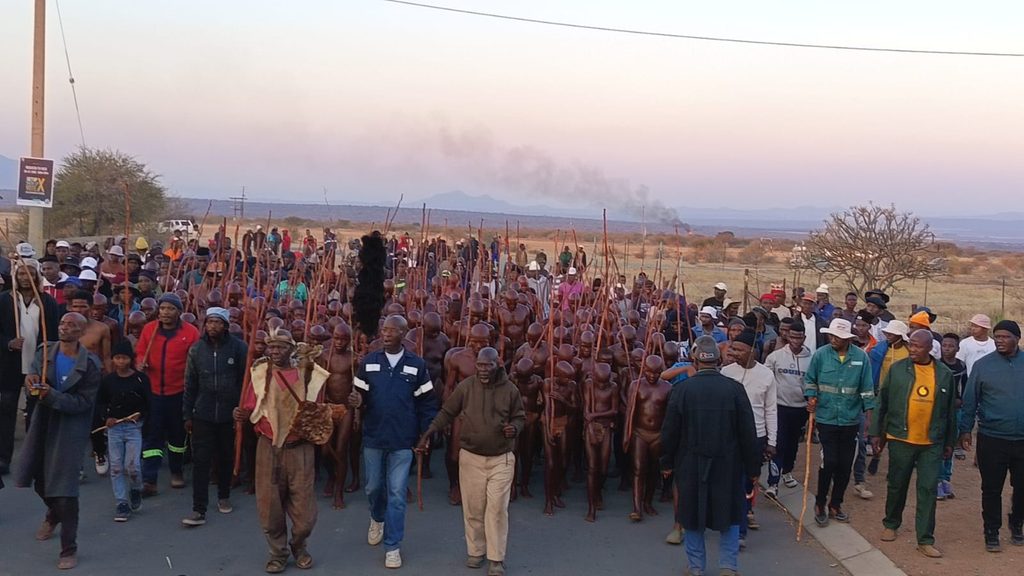
The Batau Ba Seloane Traditional Council has successfully concluded a four-week male initiation school, marking an important moment in the continuation and preservation of our cultural heritage.
The initiation school brought together young boys and men who undertook an important journey of learning, discipline, cultural education and personal development. It was made possible through the commitment of the Traditional Council, initiation school leadership, parents and guardians, elders, community members and everyone who contributed to the success and safety of the programme.
For the Batau Ba Seloane, Koma is more than a ceremony. It is an important part of cultural education and the transmission of knowledge from one generation to the next.
Preserving Culture Through Initiation
Culture survives when knowledge is passed on.
For generations, traditional initiation has provided a structured environment in which young people are introduced to important aspects of their cultural identity, responsibilities and conduct as they grow into adulthood.
In a rapidly changing world, many traditional practices face the risk of being forgotten. Modernisation, migration, technology and changing social attitudes can create distance between younger generations and the customs of their ancestors.
Initiation provides an opportunity to close that gap.
Through Koma, young men are taught that belonging to a community comes with responsibilities. They are encouraged to understand their identity, respect their parents and elders, value their community and carry themselves with discipline and dignity.
The knowledge shared during initiation is not simply about the past. It can help young men understand how their behaviour affects their families, their communities and future generations.
A Journey of Discipline and Responsibility
One of the important principles of initiation is discipline.
The initiation school requires participants to step away from their ordinary routines and enter an environment where they are expected to listen, learn, participate and develop resilience.
This period creates an opportunity for elders and instructors to impart lessons that may not always be taught in a conventional classroom.
Young men are reminded that adulthood comes with responsibility.
They are expected to respect their parents and elders, contribute positively to their communities, avoid destructive behaviour and understand that their choices have consequences.
These principles remain relevant regardless of how society changes.
Passing Knowledge From One Generation to the Next
Perhaps the greatest value of a traditional initiation school is the transfer of knowledge between generations.
Elders carry experiences and knowledge that cannot simply be found in books or on the internet. When that knowledge is shared with younger generations, cultural continuity is strengthened.
The young people who participated in this year’s initiation school will eventually become parents, elders and community leaders themselves.
What they have learned can therefore travel with them.
In this way, initiation becomes part of a continuing chain:
elders teach the younger generation, the younger generation carries the knowledge forward, and future generations inherit a living culture rather than merely a history.
Culture and the Modern World
Preserving culture does not mean refusing to acknowledge that society changes.
Traditions can be discussed, examined and strengthened while still being respected. Cultural practices must also be conducted responsibly, safely and within the applicable laws and regulations.
The preservation of culture is strongest when communities take ownership of their traditions while ensuring that those traditions continue to serve the values of dignity, responsibility, respect and community.
For the Batau Ba Seloane, this means creating space for young people to understand where they come from while preparing them to participate responsibly in the society in which they live.
A Community Effort
The successful completion of the initiation school was not the achievement of one person or institution.
It was a collective effort.
The Traditional Council extends its appreciation to the parents and guardians who entrusted their children to the process, the initiation school leadership and instructors who guided the initiates, and the community members who provided support throughout the four-week programme.
We also acknowledge the courage and commitment of the initiates themselves.
Their participation represents more than the completion of a traditional programme. It represents their connection to a cultural heritage that has been carried by generations before them.
Looking to the Future
The preservation of culture is ultimately about what we choose to pass on.
Every generation has a responsibility to ensure that valuable knowledge, customs and traditions are not lost.
The successful completion of the Batau Ba Seloane male initiation school is therefore not simply the end of a four-week journey. It is another chapter in the continuing story of our people.
As these young men return to their families and communities, we hope that they carry with them the lessons of discipline, respect, responsibility and pride in their cultural identity.
Our culture belongs to the generations before us, the generation living today, and the generations yet to come.
By teaching, practising and responsibly preserving our traditions, we ensure that the cultural heritage of the Batau Ba Seloane remains alive for future generations.