
Last Updated on December 18, 2024 by Batau
The author of the document is Mr. Seduma MP, LED Manager Lepelle-Nkumpi.
Households as Food Security Hubs for the Development of Kgwaripe in Ga-Seloane, Lepelle-Nkumpi, South Africa
Abstract
Households, as the smallest units within the Kgwaripe community in Ga-Seloane, possess immense potential to become pivotal rural food security hubs. This proposal explores the possibility of local households participating in an agricultural concept called “one-household one agricultural product.” The aim is to enhance food security and reduce poverty. The research will contribute to the body of knowledge by examining agricultural alternative programs, technological and technical support, and innovative methods that can be utilized by the community. These initiatives would serve as steps towards food security, job creation, poverty alleviation, and sustainable rural development.
The research will employ both qualitative and quantitative research designs, utilizing questionnaires and interviews for data collection. There is a need to establish a community that depends on agriculture and to provide the necessary infrastructure for micro-business development. This will directly contribute to reducing poverty and unemployment. The research findings will be aligned with Local Economic Development (LED) principles, seeking to empower Kgwaripe toward sustainable development and self-sufficiency while generating income from excess agricultural produce.
Keywords: Households, food security, poverty reduction, local economic development.
1. Introduction
The concept of Local Economic Development (LED) in a rural South African setting, especially in previously disadvantaged areas, requires comprehensive research and understanding. LED strategies are designed to improve the livelihood of communities, and in this case, economic development through agriculture within households is emphasized.
This research is grounded in the National Development Plan (Vision 2030), focusing on food security and poverty alleviation through the active participation of Kgwaripe households. The ultimate goal is to create sustainable small, micro, and medium agriculture-based enterprises that can improve the livelihoods of the community. This initiative is expected to make Kgwaripe self-sufficient, enhancing food security and generating income from the sale of excess agricultural products.
2. Literature Review
2.1. Local Economic Development: An International Perspective
The World Bank defines Local Economic Development as a process aimed at building the economic capacity of a local area to improve its prospects and quality of life. It involves the collaboration of public, business, and non-governmental sectors to create better conditions for growth and employment.
The World Bank (2003) suggests that poverty alleviation should occur through integrating LED principles to provide basic services such as water, electricity, healthcare, education, and security to impoverished communities. Moreover, LED should be implemented through partnerships between various stakeholders to foster growth and economic development.
Community participation is crucial to LED success, as it enables individuals to earn a living while preserving their customs and traditions (Pretorius & Blaauw, 2008). Community-driven initiatives can promote self-sufficiency and contribute to regional, national, and global development (DPLG, 2006).
2.2. Local Economic Development: The African Context
The African Economic Outlook (AEO, 2016) highlights Africa’s strong economic growth, despite global hardships. It emphasizes the role of urbanization and infrastructure development in driving economic transformation through agriculture, industrialization, and services.
The AEO also discusses the importance of social development, environmental management, and access to energy as catalysts for further economic growth. In rural areas like Kgwaripe, these factors can contribute to increased agricultural productivity and poverty alleviation.
2.3. Local Economic Development: The South African Context
In South Africa, LED has been adopted as a tool to address post-apartheid socio-economic challenges, such as extreme inequalities and unemployment (Nel & Humphrys, 1999). Research has shown that poverty, illiteracy, and poor living conditions are prevalent in many South African households (Reitzes, 2004).
To address these issues, South African development efforts must adopt a people-centered approach that encourages community participation (Theron, 2005). The Kgwaripe agricultural initiative aims to reduce poverty and promote food security by incorporating LED principles.
2.4. Local Economic Development: The Limpopo Context
Limpopo Province, where Kgwaripe is located, faces significant economic challenges, with many communities depending on agriculture as their primary means of survival. The Kgwaripe agriculture initiative seeks to use LED as a vehicle for food security and poverty alleviation within this context.
2.5. Local Economic Development: The Lepelle-Nkumpi Municipal Context
The Lepelle-Nkumpi Municipality, home to Ga-Seloane and Kgwaripe, has a predominantly rural population. It is crucial to integrate agricultural programs into the local economy to improve living conditions and create jobs in this municipality.
2.6. Local Economic Development: Implementation in Ga-Seloane, Kgwaripe
In Kgwaripe, the LED-driven agricultural initiative is expected to uplift households by promoting agricultural production and empowering the community to engage in micro-enterprises. This initiative can serve as a model for other rural communities facing similar challenges.
3. Methodology
The research used both qualitative and quantitative data collection methods. Questionnaires were distributed to potential participants, with a total of 12 respondents (24.5% of the households in Kgwaripe). The study aimed to assess the feasibility of the one-household one agricultural product initiative in achieving food security and poverty reduction.
Interviews and field notes were also used to gather data from participants, who shared their perspectives on farming, the potential for economic growth, and the challenges they face in their daily lives. The research was conducted over a single day, with a focus group interview providing additional insights.
4. Findings
4.1. General Information About Kgwaripe and the Respondents
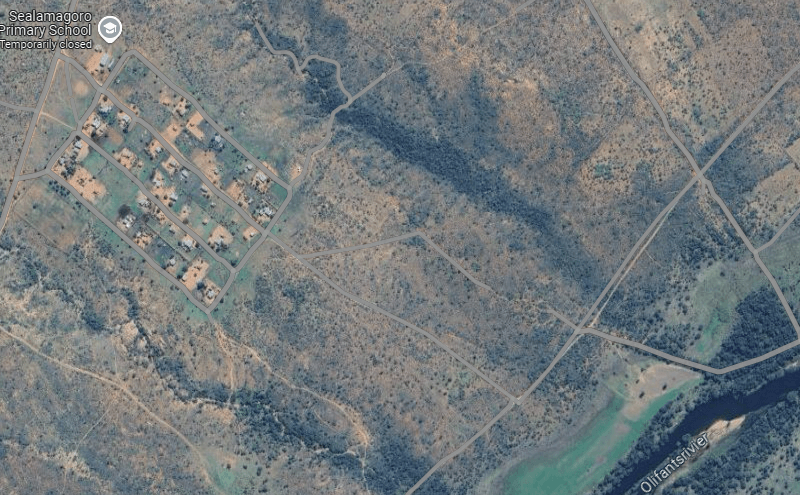
Kgwaripe is a small village of 49 households with limited economic activity. The majority of households have experience in small-scale farming, though most live in poverty and lack regular income. Respondents expressed enthusiasm for the proposed agricultural initiative, viewing it as a way to improve their livelihoods and create economic opportunities.
4.2. Services
The village faces several infrastructure challenges, including inadequate water supply, poor road conditions, and a lack of waste removal services. However, access to electricity is stable, although it is expensive for most residents.
5. Discussion
The research revealed that Kgwaripe has the potential to become a food-secure community if the right programs are implemented. Key areas that require immediate attention include:
- Water Reticulation: Water access is crucial for any agricultural initiative. There is an urgent need to provide each household with reliable water supply.
- Electricity: While electricity is available, the cost is burdensome for many households. Solutions should include indigent support programs.
- Road Infrastructure: The road network needs improvement to facilitate the transport of goods to and from the village.
- Waste Management: Waste management strategies, including recycling and composting, should be introduced to maintain environmental sustainability.
- Agricultural Development: The Department of Agriculture should assist with soil testing, product identification, and providing the necessary infrastructure to support the one-household one agricultural product initiative.
By addressing these areas, Kgwaripe can be transformed into a rural food security hub, with agriculture serving as the backbone for poverty alleviation and local economic development.